Parent Resources

Camper Resources

Our Blog

Contact Us


Keeping Exercise Fun for Your Child

Adults who struggle with their weight can go to the health club to get into shape. Most adults understand calories must be burned, and a rigorous diet must be followed. However, children have a more difficult time losing weight, and most overweight children will quickly get bored if told to exercise.

Exercise doesn’t seem nearly as exciting as playing video games or watching a movie. If you tell your child to go outside to do something active, there is a good chance he will just sit on the porch; this isn’t much of an improvement. Weight loss camps for kids are effective because they manage to provide children with activities that are enjoyable. At weight loss camp, children get to have fun and play, which allows them to naturally burn calories.

Parents of overweight children should take a cue from weight loss camps and provide children with fun ways to exercise. You might be able to get your child to go on walks with you or even a jog. But for many children this doesn’t seem very fun. However, you can go on a bug hunt or go hiking in search of wildlife; for many children, this does sound like fun.

A great way to burn calories is through swimming. Swimming works the entire body, and it is very effective for weight loss. More importantly, most children love to swim and play in the pool. Planning a weekly visit to the pool may be just the thing your overweight child needs to get into shape.

Chores and duties provide another avenue for exercise. Do you have a dog? Perhaps your kid should be in charge of walking the dog each day. Do you live close enough to school for your child to walk? This provides another opportunity for exercise.

Getting the entire family involved is a great way to get an overweight child in shape. Games provide a fun way to burn calories. Try a game of charades, or if you are energetic enough, play hide-and-go-seek or even tag. Perhaps a family bike ride to the park or maybe a game of frisbee at the beach.

Kids love to have friends over. If your child wants to invite a friend over to watch TV or to play video games, encourage them instead to do something more active. Most kids will find plenty to do at the park. Send them on a bike ride or even a trip to the zoo.

Another great activity that can involve the whole family is camping. A weekend camping trip is a great opportunity for exercise and fun. Have your child help set up the tent and chop and stack fire wood. Enjoy hiking and exploring the surroundings with your children. Family camping trips are fun for all involved, and exercise opportunities are ample. Just make sure to leave the TV and portable video games at home!

Many of the recommended activities require involvement from the whole family. Family involvement helps provide the motivation for exercise just as the kids and instructors at weight loss camps help provide fun and motivation. Additionally, it helps to keep everyone in shape. So turn off the television and enjoy getting into shape with your child!

Put Your Child On The Path To A Healthier And Happier Life

Not too many years ago, fast food restaurants were an occasional family treat.  Children in many families now ingest Mcfries and chicken nuggets several times a week.   Bags of potato chips were served with barbecue meals of hot dogs and burgers or dumped into bowls for parties.  Many of today’s pantries routinely offer open bags of chips or single serving size bags of potato chips for frequent snacks.

It’s easy to place all the blame on childhood obesity on fast food and high calorie snacks but not only the calories damage the health of children.  The foods lack nutritional value.   Children are eating preservatives and chemical flavors, ingesting far more salt and sugar than nutritionists recommend and are filling their stomachs with food that does not efficiently fuel their body.

Obese children are seldom found eating a fresh vegetable or piece of fruit.  Too often, the options are choosing between cupcakes and cookies.  This new way of eating was enabled by advances in packaged foods.  There is no effort involved in providing high calorie snacks today as all of the foods that used to be treats made at home are now packaged in a way that encourages frequent consumption.

For generations, children in farming communities ate meals that would be considered unhealthy today.   Fried meats, creamed vegetables, plenty of carbohydrates and dessert once or twice a week was common fare in farm families.  Yet few children were overweight and even fewer suffered from childhood obesity.

Weight gain was not a problem because the caloric intake was quickly burned off by outdoor work and activities.   That is the missing element in society today.  Even young children are glued to TV watching a constant stream of rented movies.  Elementary school children play video games for hours and teens are updating MySpace and Facebook pages as they Twitter every few minutes.

Weight loss camps remove the sedentary activities children have so easily adapted to.

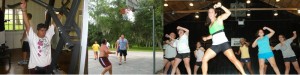
Outdoor activities are not only encouraged but are organized to include all the camp participants and provide physical activity.  Swimming, kayaking or canoeing, racing up hills, games of tag, dancing – these are activities that make up a typical day for many attending.

Exercise produces energy.   It raises the metabolism, burns fat, and tones muscles. The significant increase in exercise at weight loss camps for kids makes them feel better and also carries significant health benefits.

Children have food choices at camp but all choices are nutritionally sound.  Food is not used as a reward for behavior nor used to make a child feel better.  Positive reinforcement is never food based and exercise is not viewed as punishment – instead, “exercise” at camp is generally not what kids think of when you say the word “exercise” – it’s fun, exciting, and the kind of thing that kids want to keep doing.

Setting a Good Example to Help Your Kids Lose Weight

Whether they admit it or not, children and teens look up to the adults in their lives.  When it comes to issues about health, a number of the habits that kids develop are a direct result of the behaviors that they mimic from their parents.  If you have an overweight child, the truth is that in most cases some of the habits that led to their excessive weight gain were learned from you.  Thus, if you have a child who needs to lose weight and you’re considering sending them to a weight loss camp (or they have attended one and are returning home), you will need to make some changes to your habits to be a positive role model.  While the majority of the articles I post here revolve around strategies for kids, I’d like to take this opportunity to highlight the role of parents a bit more.

As we all know, losing weight comes down to two things – eating better and exercising more.  That is the formula that has worked for centuries and will continue to work for many more.  For parents of kids trying to lose weight, the common saying of “Do as I say, not as I do” will not work.  Put yourself in their shoes – would you want to sit down to a snack of carrots and celery while the rest of the people snacking with you ate cookies, chips, candy, etc?

So, if you’re making efforts to change the diet of your child, make sure you make similar changes in your diet.  As I mentioned previously, if your kid switches to diet soda or low fat milk, don’t keep regular soda and milk around the house for the rest of the family.  Prepare healthy meals for the entire family and don’t make the diet of one child “special.”  The support you provide by making the same changes as your child will go a long way…and it will benefit your personal health (and the health of the rest of the family) as well.

Since exercise and increased activity levels are equally important, you also need to be a good role model here too.  Set aside more time to play with your kids – take them to the park for a walk or to play on the playground if they’re still at that age.  If they’re a bit older, try things like hikes or playing a game of catch in the back yard.  Or you can do things like go to the local museum or zoo – though not really thought of as forms of exercise, these activities involve a lot of walking around to view the different exhibits – and they can be educational.

Televisions, computers, video games, and other “screens” are also an area where changes will likely need to be made.  Kids today spend more time than ever sitting down playing games, surfing the web, or watching television.  You can make this a family event with things like the Wii Fit that are video games that involve physical activity.  Additionally, be aware of how much time you spend watching TV or using the computer.  Your child will not feel very supported if you tell them they need to go play outside instead of watching TV if they know that you’re just going to watch TV while they’re outside.

Finally, encourage your kids to get involved in activities like organized sports and be supportive by attending their practices and games and providing encouragement.  Also, don’t limit them to the sports that you are familiar with or that you played when you were growing up.  If your kid expresses an interest in something that you’ve never heard of or know little about, make it a learning experience for everyone.

The key is to remain positive.  Summer weight loss camps are successful because they do a great job of removing kids from their “normal” routine, introducing new and fun activities, serving healthy foods, and creating a healthy and supportive environment where making some changes is easy.  With the right mindset and role modeling, parents can be an equally important part of helping their child develop a healthy lifestyle.

Making Weight Loss a Family Affair – Part II

Parents who want to help their child lose weight at home before or after the child attends a weight loss camp must often undo problems they (the parent) caused. If they allowed the child to dictate what he ate without restriction it will take time to establish nutritional rules. It may also require the full cooperation of every member of the family. A child who is not allowed to have sweets will feel only frustration if he knows a locked cabinet is filled with sweet snacks that other family members are eating. He feels deprived, unloved and mistreated and will not be able to focus on solving his own weight problem.

The first step to establishing a good diet is to toss out all foods that do not contribute to the nutritional plan for your child. Most of that junk food isn’t healthy for anyone in the family and if necessary can be eaten away from the home. If your overweight child is demanding on a grocery trip, don’t take him with you. Older children might benefit from a grocery buying trip where you explain and compare ingredients and labels (and calories, sugar and sodium).

Establish family meals where healthy foods are served. No one in the family will suffer because food is not fried or sauced. Instead, the entire family will receive positive health benefits from eating a balanced low fat diet. Changing the eating habits of the entire family will provide the overweight child with the greatest chance of success.

Instead of watching television or playing video games with your obese child, go for a walk with him. If you drive your child to school, drop him off at the curb rather than at the front door of the school. Take your child places where walking is required such as a zoo or aquarium. Organize family weekend activities of swimming or camping. Children are easily motivated to participate in a project to “improve our family’s health” but may drag their feet reluctantly when the subject is “you need to lose weight”.